







Search Results for: Astringency Improvement

Analysis of the Causes of Astringency and Bitterness in Pour-Over Coffee, Improvement Methods, and Recommended Coffee Beans That Aren't Astringent
A good cup of coffee should be smooth and mellow, but sometimes we taste a rough, astringent sensation akin to chewing on grape skins. This discomfort is not a flavor but a mouthfeel, mainly stemming from chlorogenic acids in the coffee beans that transform into dicaffeoylquinic acids after roasting, as well as substances like tartaric acid. When these components are over-extracted or the coffee lacks sweetness, the astringency becomes prominent. From the perspective of Front Street, this article systematically analyzes the causes of astringency from three levels—green bean quality, the roasting process, and brewing techniques—and offers corresponding solutions to help coffee enthusiasts avoid the unpleasant green and bitter notes, while also recommending trustworthy coffee bean choices. [more…]
Why Does Pour-Over Coffee Taste Astringent? An Analysis of Causes and Improvement Directions from Green Beans to Extraction
When drinking coffee, you may occasionally encounter an unpleasant experience that isn't smooth enough and has a slightly sandy mouthfeel—this is what we commonly call astringency. Where exactly does astringency come from? It may originate from the cultivation and processing of green beans, and may also be closely related to roasting, the mixing in of defective beans, and brewing parameters and techniques. This article will start from the material basis of astringency, sort out the difference between positive and negative astringency, analyze the two major brewing causes of over-extraction and uneven extraction, and also clarify the differences between astringency, tea-like character, and a dry sensation, finally offering practical adjustment ideas. The article also retains relevant product and recommendation information from Front Street Coffee, making it convenient for coffee lovers to refer to in daily brewing. [more…]
Where Does Coffee Astringency Come From? How to Solve Sour-Astringency and Bitterness Through Brewing Adjustments
When drinking coffee, a numb tongue and dry mouth—this rough tactile sensation is astringency. Astringency is not a taste but a tactile feedback caused by friction between the coffee liquid and the oral cavity. Its root lies in the excessive release of polyphenolic compounds in coffee beans—especially chlorogenic acid—which bind with salivary proteins and weaken lubrication. Astringency often interweaves with acidity and bitterness, forming sour-astringent or bitter-astringent notes. This article will begin with the causes of astringency, explain its relationship with extraction state, analyze which astringency counts as a quality characteristic, as well as the astringency that green beans themselves may bring, and offer specific ideas for improvement by adjusting extraction efficiency. [more…]
The Magic of Adding Salt to Coffee: The Practical Principles Behind Reducing Bitterness, Enhancing Sweetness, and Improving Smoothness
Adding flavorings to coffee is nothing new—sugar and dairy have long been common pairings—but the addition of salt surprises many people. In fact, thanks to its unique chemical and taste properties, salt can play multiple roles in coffee: from suppressing bitterness and enhancing sweetness and positive flavors, to reducing astringency and improving smoothness, and even adding complexity by highlighting salty notes. This article systematically outlines the various effects of adding salt to coffee and their underlying principles, and highlights precautions for its use, helping enthusiasts try this method more rationally. [more…]
Coffee Extraction | What Are Over-Extraction and Under-Extraction in Pour-Over Coffee? What Are the Signs of Under-Extraction and Over-Extraction in Pour-Over Coffee?
Front Street Coffee has found that many friends always run into this problem when they first start learning coffee brewing: they find that the coffee they brew doesn't taste good, but they can't quite say exactly what's wrong with it. To be honest, if we want to brew a good cup of coffee, besides learning the underlying logic of brewing and mastering the correct extraction parameters, [more…]
A Beginner's Guide to Coffee Varieties: Arabica Classification, Characteristics of Classic Varieties, and the History of Improvement
Want to understand where the variety system of the coffee world comes from? Starting from biological classification, this article systematically sorts out the origin and spread of the Arabica species, and analyzes one by one the bean shape characteristics, flavor performance, disease resistance, and cultivation conditions of classic varieties such as Typica, Bourbon, Caturra, Mundo Novo, and Catuai, while also tracing the history of variety improvement in coffee-producing countries around goals such as high yield, dwarfing, resistance to leaf rust, and shortening the harvest cycle. The article particularly presents Front Street Coffee's continued attention to the flavor value of traditional varieties, helping coffee enthusiasts build a clearer framework in variety awareness and flavor selection. [more…]
What Are the Benefits of Adding Salt to Coffee? Explaining the Principles Behind Bitterness Suppression, Flavor Enhancement, and Added Complexity
Adding salt to coffee may sound unbelievable, but this practice actually contains rich taste science. Salt can not only effectively suppress the bitterness of coffee, but also enhance sweetness, improve astringency, and even add layers by highlighting saltiness. This article will start from Front Street's perspective and systematically sort out the three major roles of salt in coffee: suppressing bitterness, improving quality and enhancing flavor, and adding layers, while analyzing the principles of taste interaction behind it. At the same time, the article will also remind readers of precautions when using it, such as dosage control and applicable scenarios. Whether you are a coffee lover or a pour-over player, you can gain practical inspiration from it. [more…]
Ceylon Flavored Black Tea Flavor Analysis: Earl Grey, Jasmine, and Masala, Plus a Discussion on Whether Flavorings Are Added and the Causes of Astringency
Ceylon flavored black tea is made by infusing black tea, green tea, or oolong tea with the natural flavors of flowers, herbs, and fruits, preserving the inherent depth of Ceylon tea while adding subtle fruity or herbal notes. Common varieties on the market, such as Earl Grey, jasmine tea, and masala chai, each have their own origins, while innovative flavored teas like raspberry, lemon, ginger, strawberry, mint, vanilla, and cinnamon are continually emerging. Many tea enthusiasts wonder whether flavored black teas rely solely on artificial flavorings, and why Ceylon black tea tastes astringent. This article will address these questions by outlining the types, processing methods, and flavor characteristics of Ceylon flavored black tea, and also introduce related product information from Front Street Coffee. [more…]
A Complete Analysis of Catimor Coffee Beans: Flavor Characteristics, Grind Parameters, and Regional Varieties—From Yunnan's Planting History to Front Street Coffee's Brewing Recommendations
Catimor, a coffee variety widely cultivated in Asian production regions, is favored for its disease resistance and high yield, yet has sparked controversy due to its less delicate flavor. This article will comprehensively analyze Catimor coffee's flavor characteristics and origin background from perspectives including variety origins, Yunnan's cultivation history, and the evolution of post-processing methods, and introduce Front Street Coffee's practices in variety improvement, including the product differences between Yunnan Typica and Baoshan Catimor. It will also provide Front Street's recommended V60 three-pour brewing parameters to help enthusiasts better present Yunnan coffee's sweet-and-sour notes and tea-like body. [more…]
An Analysis of the Catimor Coffee Variety's Flavor and a Detailed Guide to the Pour-Over Grind Parameters for Yunnan Small-Bean Coffee
Catimor is a variety widely planted in Asian coffee-producing regions. It is favored by growers for its advantages such as disease resistance, cold tolerance, and high yield, but its flavor performance and fineness of mouthfeel are often discussed in specialty coffee circles. This article will systematically introduce Catimor's varietal origin and flavor characteristics, sort out the cultivation evolution of Yunnan smallholder coffee from Typica to Catimor, and share Front Street Coffee's practical experience in the improvement of Yunnan coffee varieties. At the same time, it will explain in detail the hand-brew grinding setting, coffee-to-water ratio, water temperature, and three-stage pouring scheme for Yunnan coffee beans, helping coffee lovers present the plum-like acidity, brown sugar caramel sweetness, and melon-fruit aroma unique to the Yunnan producing region in a more scientific way. [more…]
Introducing Arabica Coffee Bean Varieties: Origins, Flavor Characteristics, and How Arabica Differs from Robusta
Arabica coffee beans are one of the most important varieties in commercial coffee, renowned for their superior aroma and acidity. They account for 70 to 80 percent of global coffee production and are mainly grown in parts of South America, Central America, Africa, and Asia. Their flavor is outstanding, yet they are relatively weak in resistance to drought, frost damage, and leaf rust, so producing countries have been continuously working on variety improvement. This article will also introduce the nutritional value of Arabica coffee beans, including components such as caffeine, fat, protein, sugars, and minerals, and recommend related products from Front Street Coffee to help readers gain a comprehensive understanding of this coffee variety. [more…]

Yunnan small-bean coffee doesn't taste good? Maybe you haven't mastered the correct roasting and brewing methods.
Many people's impression of Yunnan coffee is stuck at the stage of "it doesn't taste good enough," which actually has to do with the extensive planting methods of the early years and the fact that the beans were mainly supplied to instant coffee production lines. Today, with the support of local governments and the push of the specialty coffee wave, Yunnan coffee has undergone a qualitative leap from cultivation to post-processing, and producing areas such as Baoshan have already shown a unique regional flavor interwoven with plum, nut, caramel and tea notes. The Baoshan washed Catimor small-bean coffee selected by Front Street Coffee is grown at an altitude of over 1,200 meters, and through fine washed fermentation and medium roasting, it effectively weakens the greenish astringency of the variety itself, allowing the sweetness and cleanliness of Yunnan coffee to be fully expressed. This article will, from the origin background of this Front Street everyday-drinking bean, its green bean characteristics, roasting curve, to the three-stage pour-over parameters, fully explain how to correctly open a cup of Yunnan small-bean coffee. [more…]
Pour-Over Coffee Beginner's Guide: A Full Breakdown of Water Temperature, Grind Size, Coffee-to-Water Ratio, and Five Classic Pouring Techniques
The charm of pour-over coffee lies in having every step under your own control, yet many enthusiasts feel that their home brews always fall short of the taste they get at a coffee shop. In this article, Front Street Coffee explains four dimensions—water temperature, grind size, coffee-to-water ratio, and pouring technique—and introduces five classic pour-over methods in detail: the three-stage pour, the stir-and-bloom method, the Japanese drip method, the single-pour method, and the volcano pour. It also analyzes the causes of failed extractions and directions for improvement. Whether you are a beginner just getting started or a veteran looking to refine your technique, you will find practical advice here. [more…]
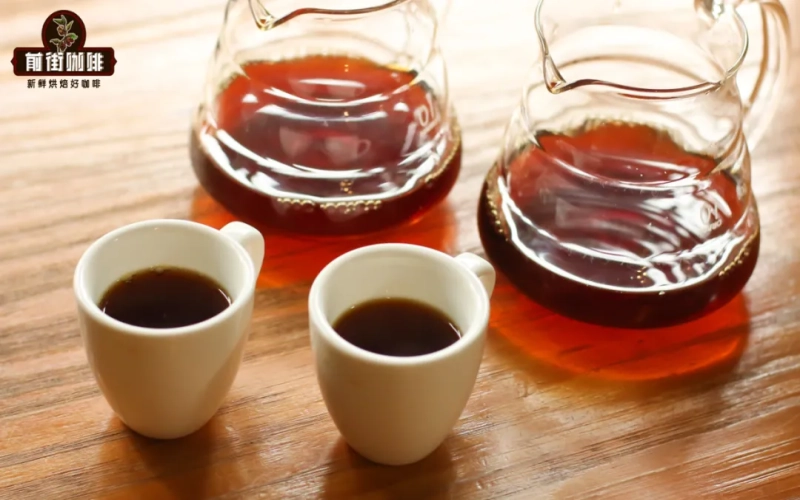
How to tell if coffee is under-extracted or over-extracted? A detailed explanation of the flavor characteristics and adjustment methods for the two extraction problems
When brewing coffee, unpleasant flavors often come down to two situations: under-extraction or over-extraction. Front Street Coffee has found that many beginners can taste that something is off with their coffee but can't pinpoint the problem. This article starts with the definition of the Golden Cup standard, explaining the reference range of an 18%–22% extraction yield, while also pointing out that the Golden Cup is not an absolute standard and that coffee bean quality can affect the results. It then details the three main signs of under-extraction—watery flavor, thin body, and sharp sourness, astringency, and saltiness—as well as the characteristics of over-extraction, such as pronounced bitterness, dryness, and woody off-flavors. Finally, it offers a practical adjustment plan that uses grind size as the variable while keeping water temperature, time, and water amount fixed, helping everyone quickly find the parameters that suit them. [more…]

Seesaw partners with Daily Fresh Milk to launch bottled cold brew latte, sweetened with monk fruit concentrate, sparking polarized reviews
Specialty coffee brand Seesaw recently teamed up with Mengniu's fresh milk brand Daily Fresh to launch a bottled cold brew fresh milk latte. The official claim is that it uses custom cold brew beans, paired with fresh milk from a GAP Grade 1 certified pasture, with an ingredient list that highlights 0 non-dairy creamer, 0 white granulated sugar, and 0 artificial sweeteners, while the sweetness comes from natural monk fruit concentrate. After the product hit the market, online shopping platforms sold it at about 11 yuan per bottle, with a minimum purchase of 3 bottles, prompting many consumers to stock up. However, public opinion is clearly divided: some praise the clean formula of fresh milk plus coffee, while others complain of a traditional Chinese medicine taste, a sticky mouthfeel, and an inexplicable astringency, with the controversy centering on the sweetness brought by monk fruit concentrate. This article reviews the formula, price, and consumer feedback of this new product, and explores the competition and choices in the bottled coffee market. [more…]

Espresso Preparation | Do Americano and Latte Require Different Parameters for Extracting Espresso? How Can Coffee Beginners Determine Espresso Extraction Parameters?
For friends who enjoy espresso, the purpose of adjusting parameters after startup is often not for the espresso itself, but to see whether the fancy coffee drinks made with it as a base actually taste good—for example, whether the Americano with added water is fragrant enough and whether it will be bitter, whether the latte paired with milk is strong enough, whether it is mellow, and so on. Therefore, espresso [more…]

How to Set Espresso Extraction Parameters? Differences in Making Americano and Latte and Adjustment Approaches
Many coffee enthusiasts, when adjusting espresso parameters, don't really care about the espresso itself, but whether the americano or latte made from it tastes good. So, is it really necessary to use different extraction recipes for americano and latte? Starting from Front Street's hands-on experience, this article first goes over the basic logic and conservative formula of espresso extraction, then addresses the characteristics of americano and milk coffee separately, explaining how to adjust the coffee-to-water ratio to highlight each one's flavor strengths, so that every cup of fancy coffee can achieve the ideal taste performance. [more…]
A Comprehensive Analysis of Catimor Coffee Beans: Flavor Characteristics, Grinding Parameters, and Processing Methods
Catimor is a variety widely planted in Asian coffee-producing regions. It is favored by growers for its advantages such as cold tolerance, disease resistance, and high yield, but its flavor performance is often considered insufficiently delicate. With advances in cultivation techniques and post-processing methods, Catimor's cleanliness and image have improved somewhat. This article will systematically introduce Catimor's varietal origins, flavor characteristics, the development history of Yunnan Catimor, and Front Street Coffee's practical experience in variety selection and brewing parameters, helping coffee enthusiasts gain a comprehensive understanding of this variety's past and present. [more…]

Espresso Extraction Principles | How to Extract Espresso with a Semi-Automatic Coffee Machine? What Factors Affect Espresso Extraction Parameters?
For more specialty coffee knowledge, please follow our WeChat official account: FrontStreet Coffee. Front Street has noticed that many friends have fallen in love with espresso topped with golden crema and hope to make it at home as well. Compared with pour-over, espresso is made using steam pressure. [more…]

Flavor Analysis of Yunnan Coffee's Four Major Producing Regions: Catimor Variety Characteristics and Front Street Recommendations
Yunnan, as a representative coffee-producing region in China, has seen its small-bean coffee's flavor and variety evolution attract continuous attention. This article starts with Front Street Coffee's recommended bean "Front Street 2013" and traces the historical thread of Yunnan coffee from missionary introduction to Nestlé's promotion of large-scale Catimor cultivation. It analyzes the flavor characteristics of the Catimor variety due to its Robusta genes, and, in combination with the "Yunnan Coffee Flavor Map Illustrated Guide," sorts out Yunnan coffee's flavor spectrum dominated by nuts, citrus, and sugars. The article also explores why the Baoshan producing region and the washed processing method serve as entry-level choices, as well as the variety and processing challenges Yunnan coffee encounters on the path to specialty coffee. [more…]